July 30, 2026 · 8 min
The sequence a data center exit has to follow, and where projects go wrong
Eight stages, and the two that get compressed under deadline pressure are the two that create the liability.
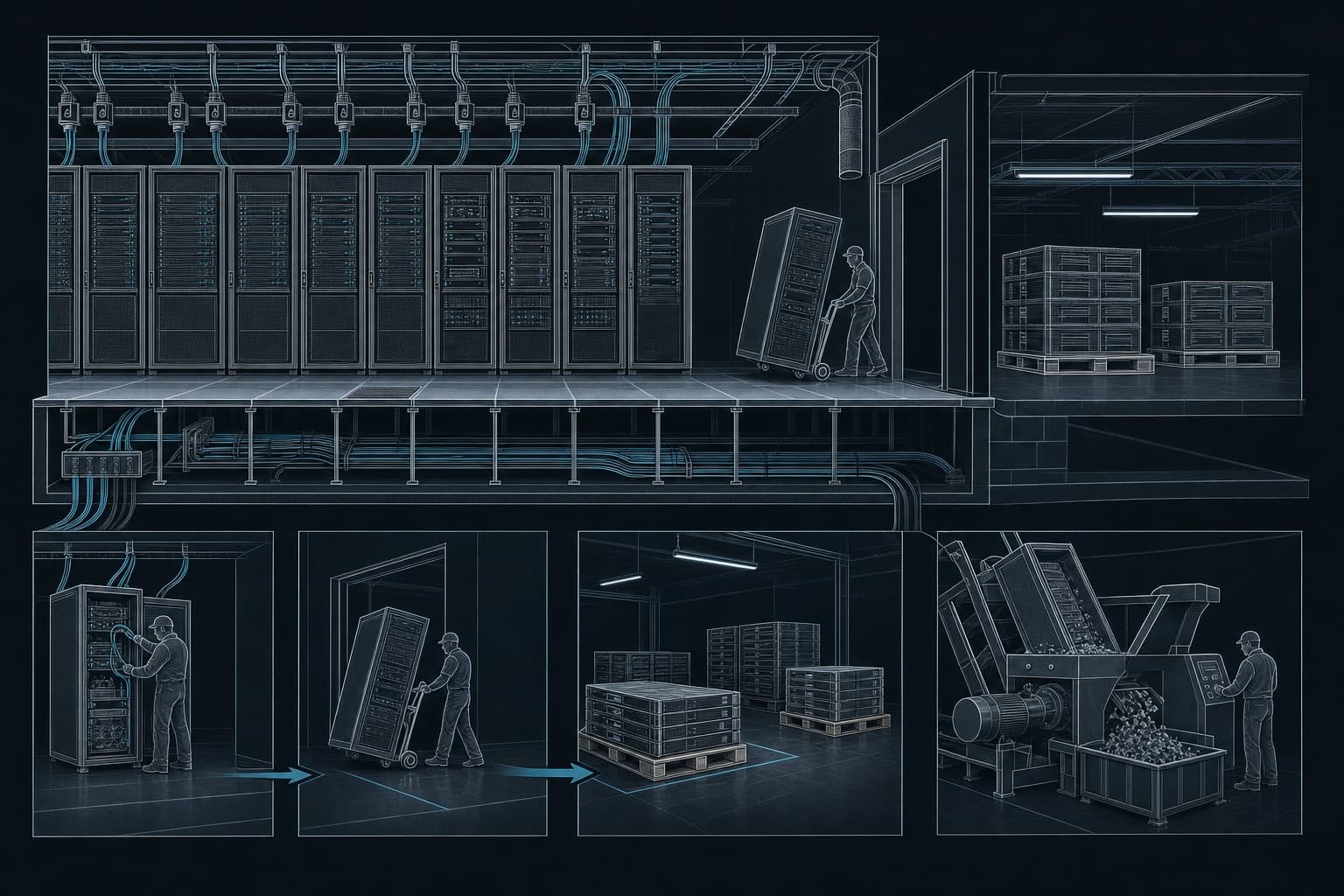
A decommissioning project is not a removal job with paperwork attached. It is a chain of custody exercise that happens to involve moving heavy objects, and the order matters because each stage produces the record the next one depends on.
1. Inventory, reconciled against the asset register
Every asset walked, scanned, and matched to what the register says should be there. This stage exists to find the discrepancies, and there are always discrepancies: assets retired on paper but still racked, assets racked but never recorded, drives moved between chassis years ago.
Discovering a missing drive at this stage is a housekeeping matter. Discovering it after the hall is empty is an incident, because nobody can now say where it went.
2. Data classification, before anything is unplugged
Which assets hold data, which hold regulated data, and which are believed to hold none. The third category is the dangerous one: a switch with a configuration backup, a management controller with credentials, a printer with a drive.
This decides which destination each asset is eligible for, and it cannot be reconstructed later. See secure data destruction.
3. Power-down sequencing and dependency mapping
What still depends on what. The commonest failure of an exit project is discovering that a service somebody forgot about was running on a host in the row being emptied. That is a business incident caused by a documentation gap, not by a decommissioning crew.
4. De-cabling and labelling
Cables cut back and labelled at the patch panel, not pulled out at both ends into a pile. This is the stage everybody underestimates, both in hours and in what it destroys: an un-labelled removal makes the remaining rows harder to work on for years.
5. Physical removal
Racks emptied, equipment palletised, rails and enclosures removed, floor tiles handled. The only genuinely conventional stage in the list, and the one buyers focus on.
6. Data destruction or verified erasure
On site, witnessed, or at a certified facility under seal. Which one is appropriate depends on the data classification from stage two and on what the organisation can defend. The trade-off is set out in destruction or verified erasure.
7. Resale, recycling, and the paperwork for both
Assets with residual value sorted from assets without, both with a documented destination. Recycling that cannot produce a downstream trail is not recycling, it is a truck leaving. See resale and recycling.
8. The certificate pack
Asset-level records: what was removed, what was destroyed and how, what was resold, what was recycled and by whom, with serial numbers reconciled back to the register from stage one. This is the deliverable, and what belongs in it line by line is in what ITAD actually covers. Everything before it was logistics.
The two stages that get compressed, and why
Inventory and data classification, because they happen before anything visible moves and because a lease deadline makes them feel like a delay. They are the only two stages whose absence cannot be corrected afterwards, and how early they start is one of the decisions taken before stage one.
A project that starts with trucks booked and ends with an incomplete asset reconciliation has produced a liability rather than an exit. The checklist form of this is on the checklist page.
Get the sequence scoped against your floor plan
The lease date is fixed. The order of work is what makes it achievable.
Data Center Exit decommissions data halls: asset inventory, de-cabling, rack removal, on-site or witnessed data destruction, resale and recycling, and the certificate trail that proves each of them happened.