September 7, 2026 · 7 min
IT equipment disposal: what disposal means when the equipment held data
Nineteen hundred searches a month and a competition index of 0.02. The broadest question in this category is nearly uncontested, so here is the full answer.
IT equipment disposal sounds like the simplest service in this field: take the old machines away. In practice it is a routing exercise. Every device that leaves an organisation goes to one of three destinations, and proper disposal consists of choosing the destination per device, proving the data is gone before it travels, and keeping the record that says both.
The first sort: does it hold data
Before anything is palletised, each item is classified as data bearing or not. Servers and laptops are obvious. The list that gets missed is longer: switches with configuration and credentials, management controllers, multifunction printers with internal drives, removable media left in chassis. An item wrongly classified as data free skips sanitisation entirely, which is the single worst failure available in this process.
Every data-bearing device is erased or destroyed, with a record per serial number, before it is eligible for any destination at all. The methods and their limits are on the destruction page.
Route one: resale
Equipment that works and that the market wants. Recent generations, common configurations, and volume lots of identical units sell best, and memory and drives are often worth more than the chassis around them. Resale is the route that can fund the rest of the project, which is where offers of free destruction get their money, and exactly why the decision about what is resellable should not be left, unexamined, to whoever profits from the answer. Which contract model puts that money where is set out in who keeps the resale upside.
Route two: recycling
Equipment with no market: too old, too broken, too odd. Recycling done properly produces a downstream trail showing where the material physically went and who processed it. Recycling that cannot produce that trail is not recycling, it is a truck leaving with your asset tags on board. The paper is the difference between the two.
Route three: destruction of the unit itself
Some policies require certain assets gone rather than sold, whatever their value. That is a legitimate choice with a real cost, because it forfeits the resale value, and it should be made per classification rather than applied as a blanket rule to an entire estate.
Note that this is a different decision from destroying the storage inside a device. A server can have its drives shredded and still take the resale route as a diskless chassis. Conflating the two decisions is how estates get destroyed wholesale when only the media needed to be.
What the disposal record contains
One line per asset: serial number, the sanitisation method applied and when, the destination it went to, and the receiving party. Plus the exceptions, because there are always exceptions: the asset on the register that was not found, the device found that was never registered. A record without exceptions has not looked. The full shape of that pack is described in what ITAD covers.
What informal disposal actually risks
The failure mode is not the fine, it is the unanswerable question. Two years after an informal clearance, an auditor or a regulator picks one serial number and asks what happened to it. The organisation that shipped mixed pallets to a general scrap dealer has no answer, and no way to construct one, because the information stopped existing the day the truck left.
The uncomfortable part is that informal disposal feels finished. The room is empty, the cost was low, and nothing goes wrong for years, until the one question arrives that the missing record was supposed to answer.
One pallet or a full hall
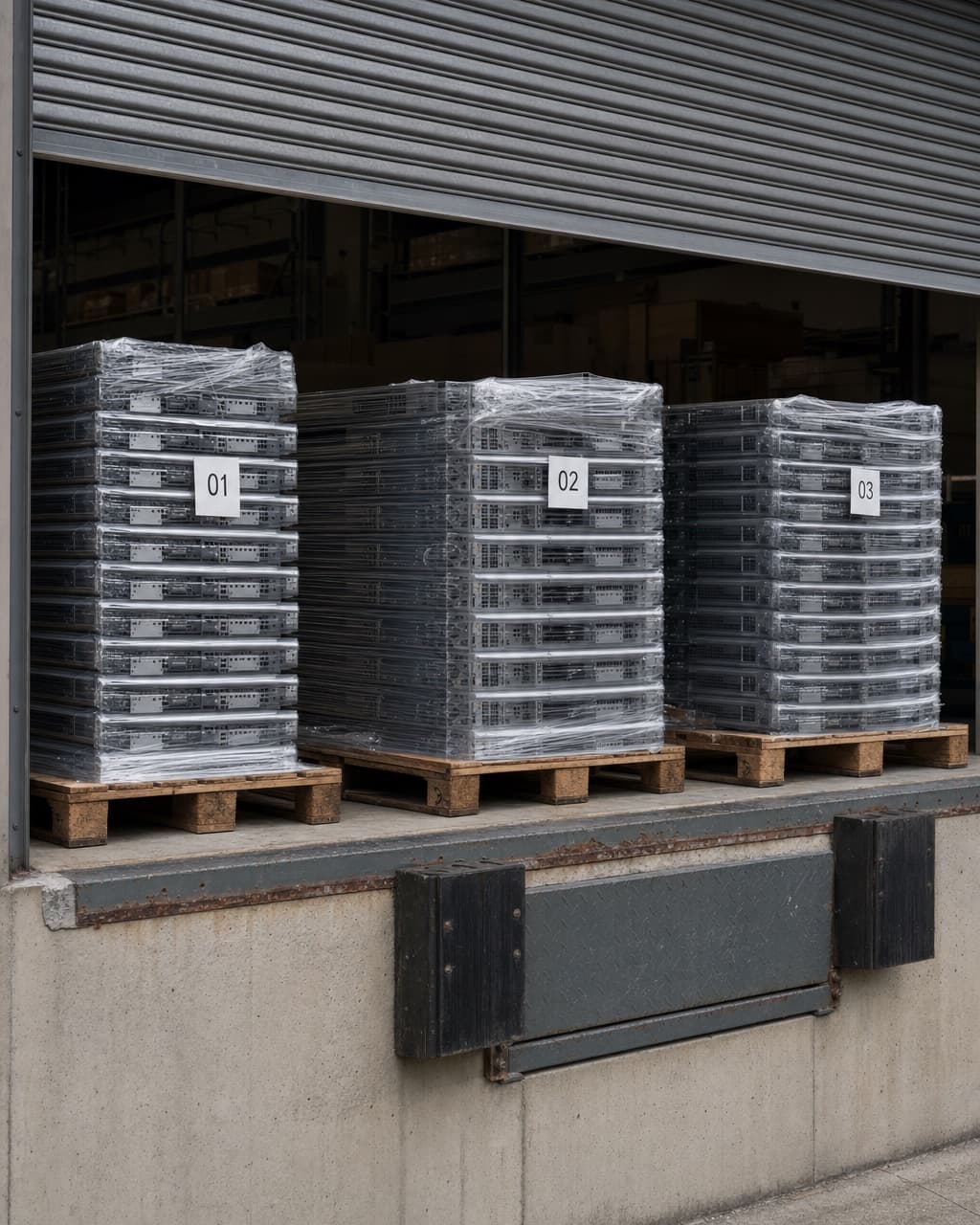
A cupboard of laptops and a data hall differ in logistics, not in discipline. The small job rides a routine: collection under seal, a bench, a report. The large one is a sequenced project with floor access, staging and deadlines, described in the exit sequence. What we perform at either scale, and what resale and recycling look like in practice, is on the resale and recycling page.
More advice
Describe the equipment before anyone books a truck
What it is, where it sits, and whether it held data. Those three answers decide the whole disposal route.
Data Center Exit decommissions data halls: asset inventory, de-cabling, rack removal, on-site or witnessed data destruction, resale and recycling, and the certificate trail that proves each of them happened.