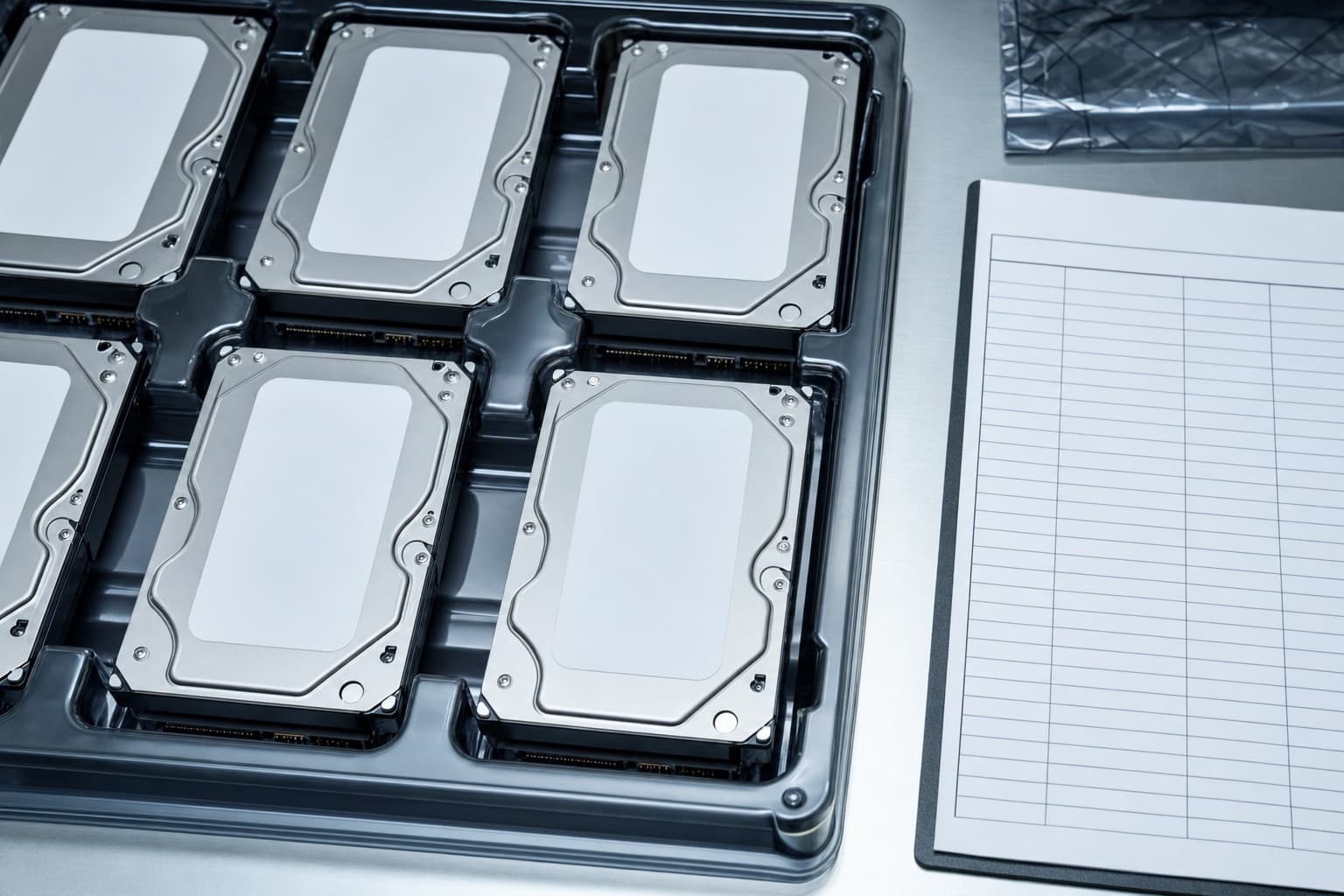
September 9, 2026 · 7 min
Data destruction: what the term covers, and what a defensible version looks like
A thousand searches a month for a term the industry uses loosely. Here is what it covers, method by method, and what separates destruction from deletion.
Data destruction is the process of making recorded data unrecoverable, permanently and provably. The definition matters because most of what organisations casually call deleting does not meet it, and because the word covers several very different techniques whose suitability depends entirely on the media in front of you.
Deletion is not destruction
Deleting a file removes the reference to the data, not the data. Formatting a drive rewrites its structures, not its contents. Both leave the recorded information physically present and recoverable with ordinary tools. Destruction, in the sense this industry means it, is defined by the outcome: the data cannot be retrieved by any means, and there is a record saying so per device.
The three families of method
Overwriting and cryptographic erasure. Software methods that replace or render unreadable every addressable location, then verify the result. The device survives and keeps its value.
Degaussing. A powerful magnetic field that destroys the recorded pattern on magnetic media, and the drive with it. It has no effect whatsoever on flash storage, which stores nothing magnetically.
Physical destruction. Shredding or disintegration of the device itself. Visible, witnessable, final, and the only option for a failed device that no software can address.
The method has to match the media
The most common technical error in this field is applying a magnetic-era method to solid state storage and issuing paperwork for it. A credible process starts by identifying the media type per device, and the final record states which method was applied to which technology. If a report cannot make that statement, it is a receipt, not evidence.
The mismatch is invisible at the time. A degaussed flash drive looks exactly as processed as a degaussed magnetic one. Only the record, or a later recovery attempt, reveals the difference, and one of those two is much cheaper than the other.
Erasure counts, when it verifies
Verified erasure is data destruction in every sense that matters: the data is gone, the report is per serial number, and the device keeps its resale value. Whether a given asset may take that route or must be physically destroyed is a classification decision that belongs to the data owner, and the trade-off is set out in destruction or erasure.
The unit of record is the device
Whatever the method, the record that results has one line per serial number: the device, the media type, the method, the date, the operator, the outcome. Records kept per pallet or per shipment answer the question “did a destruction happen” and cannot answer “what happened to this drive”, and the second question is the one audits ask.
The same discipline extends to the devices nobody thinks of as storage: controller cache modules, management controllers with credentials, configuration in switches, media left in drives. Where those sit inside a single machine is described in the storage hidden in one server. A process that only counts what is labelled as a disk misses part of the data.
Where destruction sits in a larger exit
In a full decommissioning, destruction is stage six of eight, and it depends on the data classification made back at stage two, before anything was unplugged. Devices reach the bench already inventoried and already classified, or the bench becomes the place where an unplanned discovery exercise happens under time pressure. The whole sequence is in the exit sequence.
What to keep afterwards
The per-device records, the chain of custody entries, and the reconciliation against the asset register, kept for as long as the underlying data would have carried obligations. The hardware is gone in a week. The record is the part the whole exercise existed to produce, and the options for producing it are on the destruction page.
Match the method to the media, then to the policy
Tell us what the devices are and what the data was. The right method follows from those two facts.
Data Center Exit decommissions data halls: asset inventory, de-cabling, rack removal, on-site or witnessed data destruction, resale and recycling, and the certificate trail that proves each of them happened.