August 10, 2026 · 6 min
What a decommissioning quote is made of, and what moves it most
Six factors, and the two largest have nothing to do with how many racks there are.
Buyers estimate these projects by rack count, and rack count is roughly the fourth most important factor. Here is the list in the order it actually matters.
1. Access and route
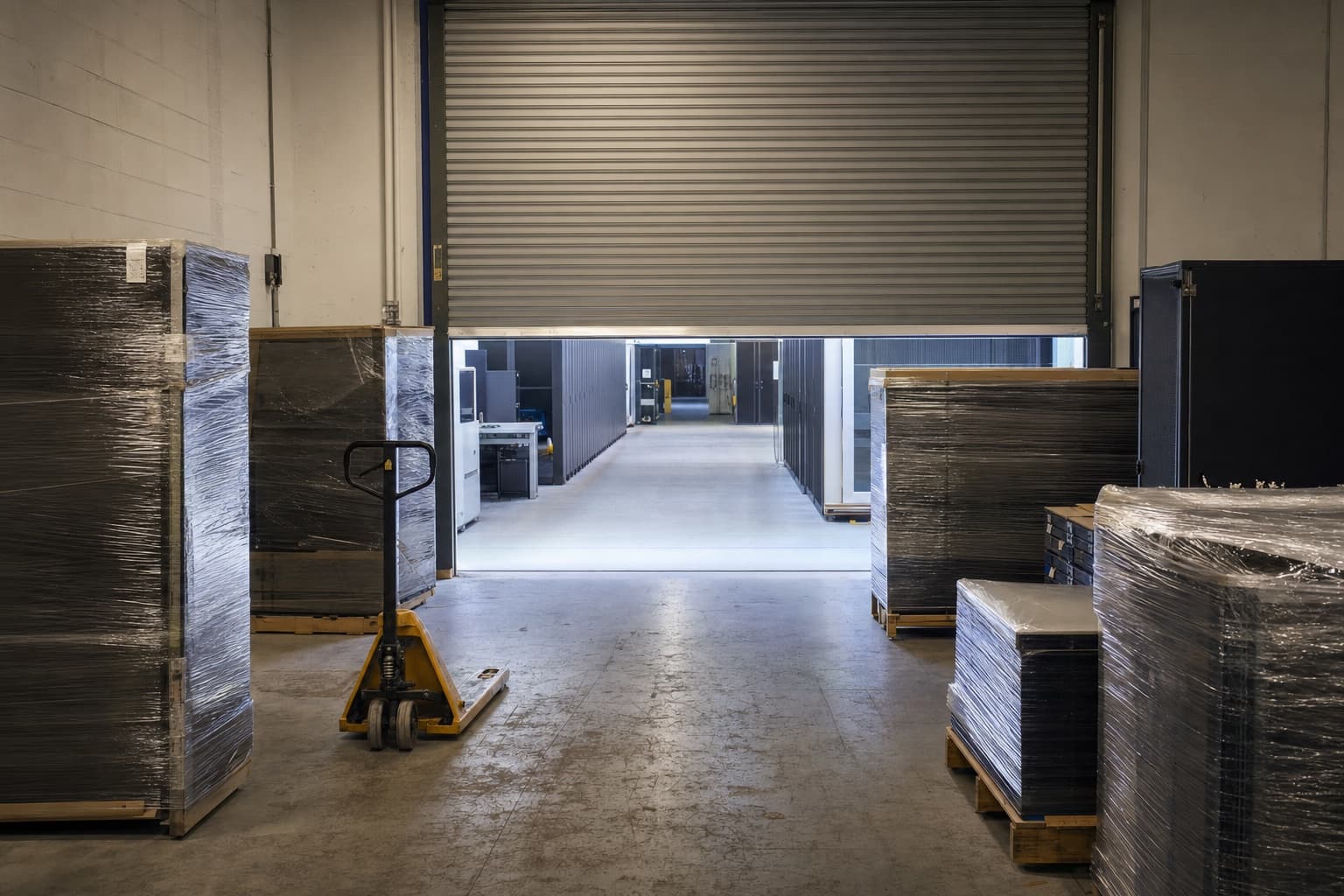
Dock availability, elevator capacity and dimensions, the distance from the hall to the dock, whether the route crosses occupied space, and whether work is restricted to out-of-hours. A hall on a ground floor beside a dock and an identical hall on the eighth floor with one goods lift shared with a hotel are different projects.
This is the factor most often absent from a quote given without a site visit, and the one most likely to move the price on site. A vendor who offers to start without one is failing a test set out in choosing a decommissioning company.
2. Drive count and destruction requirement
Data destruction is priced per device, and modern storage-dense servers carry a lot of devices. A hall with a modest rack count and a large drive count can cost more to sanitise than to remove.
This is also where the destruction-versus-erasure choice shows up in the total. See destruction.
3. The state of the asset register
A clean register makes inventory a verification exercise. An unreliable one makes it a discovery exercise, which takes several times longer and produces exceptions that have to be investigated. Why every later record depends on that entry is shown in one asset followed from register to record. This is the factor buyers can most easily improve before asking for a quote.
4. Rack count, U count and weight
The obvious factor, and a real one. It sets the crew size and the number of days, and it is the part any competent vendor can estimate accurately from a floor plan.
5. What has to be left behind, and in what state
Racks removed or left in place, cable removed to the panel or cut at the rack, floor tiles reinstated, containment dismantled, penetrations sealed, the hall handed back broom clean or to a landlord specification. A lease exit condition can add as much work as the equipment removal.
6. Schedule pressure
A lease expiry that cannot move turns a sequential project into a parallel one, which means more crew, more supervision, and out-of-hours work. Time is the most expensive constraint in this field, and it is usually the one the buyer discovered late. How early the project starts against that date is a decision taken before the process begins.
Why no figure appears here
Because the six factors above vary by an order of magnitude between two projects with the same rack count, and a published number would become the anchor a real quote is judged against. What makes up a quote line by line is on the cost page.
What we can do is walk the hall, read the register, and commit in writing to a scope whose exclusions are listed rather than implied.
Have access scoped before mobilization
Dock, elevator and route decide the schedule. They are settled in the site visit.
Data Center Exit decommissions data halls: asset inventory, de-cabling, rack removal, on-site or witnessed data destruction, resale and recycling, and the certificate trail that proves each of them happened.