October 8, 2026 · 6 min
Hard drive shredding: what the machine does, and what it does not prove
Eight hundred and eighty searches a month for the plain term. A shredder turns a drive into fragments. Whether those fragments settle anything depends on the media, the size they come out at, and the record kept around them.
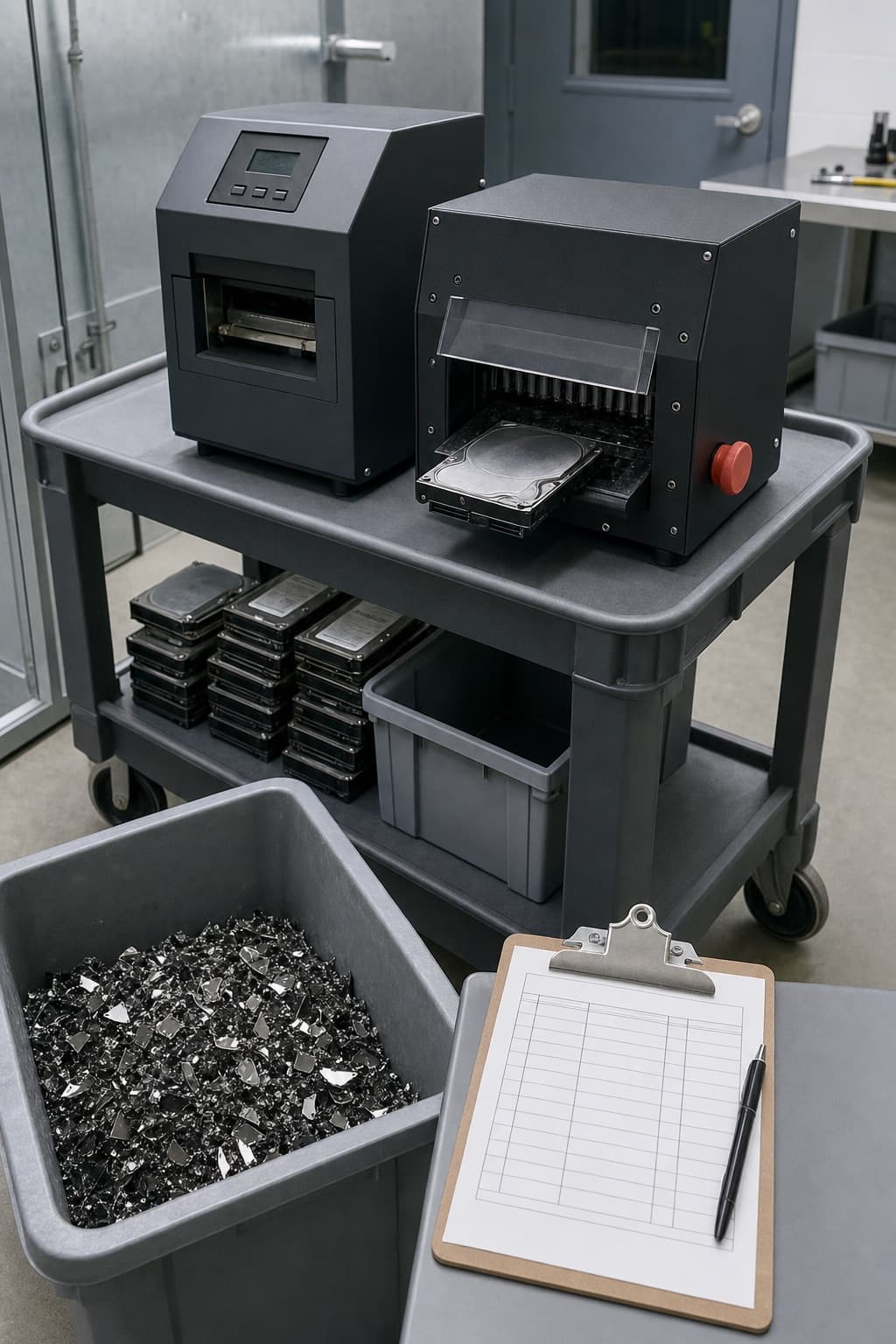
Hard drive shredding is the most visible form of data destruction and the easiest to misread. A drive goes into a cutting chamber, fragments come out, and the event looks final. It is final for the drive. Whether it is final for the data, and whether you can prove it later, are two separate questions that the machine does not answer on its own.
What a shredder physically does
An industrial shredder pulls the device between rotating cutters and reduces it to strips or particles. For a spinning hard drive, the target is the platters: the coated disks on which data is written. Once a platter is torn into pieces, reading it back would mean reassembling magnetic surface from fragments, which is not a practical attack for most threat models. The casing, the circuit board and the motor go through as well, and they are the bulk of what comes out.
Fragment size is the specification that matters
Shredders are built to an output size, set by the spacing of the cutters or by a screen the particles must pass through. That size is what makes the result sufficient or not, and it is the first question to ask. Standards and agency guidance set particle sizes by media type and by the sensitivity of the data; the value in force is in the document your policy cites, not in a vendor brochure. What the main guideline defines, and how it is read, is in the NIST 800-88 page.
Solid-state drives are a different problem
A solid-state drive stores data on small memory chips, not on platters. A fragment size that destroys a platter many times over can leave a memory chip whole, or nearly whole, because the chip is small enough to pass between the cutters. Shredding solid-state media therefore calls for a finer output, or a different method, or verified erasure before the device leaves the building. A vendor that runs every device through the same machine without asking what is in the bin is answering a question about spinning drives. The trade-off between the methods is set out in destruction or verified erasure.
Degaussing first, or not at all
Degaussing exposes magnetic media to a strong field that scrambles the recorded surface. Done before shredding, it means the data is already unreadable when the drive enters the chamber. It does nothing to solid-state media, which hold no magnetic recording. Whether a project calls for both steps is a policy decision about the data, not a matter of thoroughness for its own sake.
The machine proves nothing about which drive went in
Fragments carry no serial numbers. Once a drive is shredded, the only evidence of which drive it was is the record made before it went in: a scan of the serial number, matched to the manifest from the rack, witnessed or filmed where the policy requires it. A shredding run without that record produces a bin of metal and a statement that everything was destroyed, which is a claim and not evidence.
What happens to the fragments
Shredded output is still material: aluminum, steel, circuit board, rare-earth magnets. It goes to a recycler, and the record should say which one and under which certification, in the same way as for the rest of the equipment. Fragments sent nowhere in particular are the end of the chain that nobody audits.
Reading a shredding record
A useful record lists each device by serial number, the media type, the method applied, the date, the location, the operator and the witness where there was one, and it reconciles against the inventory taken at removal. What a certificate built on that record should contain is in the certificate of destruction page. The shredder is the cheapest part of that chain to get right.
More advice
Ask what size the fragments come out at
Then ask which standard that size answers for each media type in your inventory. The answer tells you whether the machine fits the job.
Data Center Exit is an independent reference on buying a data hall decommission. It decommissions nothing, destroys no media and holds no certifications of its own. It explains what a defensible chain of custody has to contain, which certificates are verifiable and how, and what to specify before a vendor quotes.